Restoring
Ayahuasca, and
All Her Guardians
We help bring the balance back, so that the plants, the people who steward them and the forest they grow in are left more abundant, not less, by everything the medicine has made possible.
A programme of Céu do Novo Mundo, a California 501(c)(3), EIN 84-1799040.

The medicine now flows out of the forest faster than it grows back
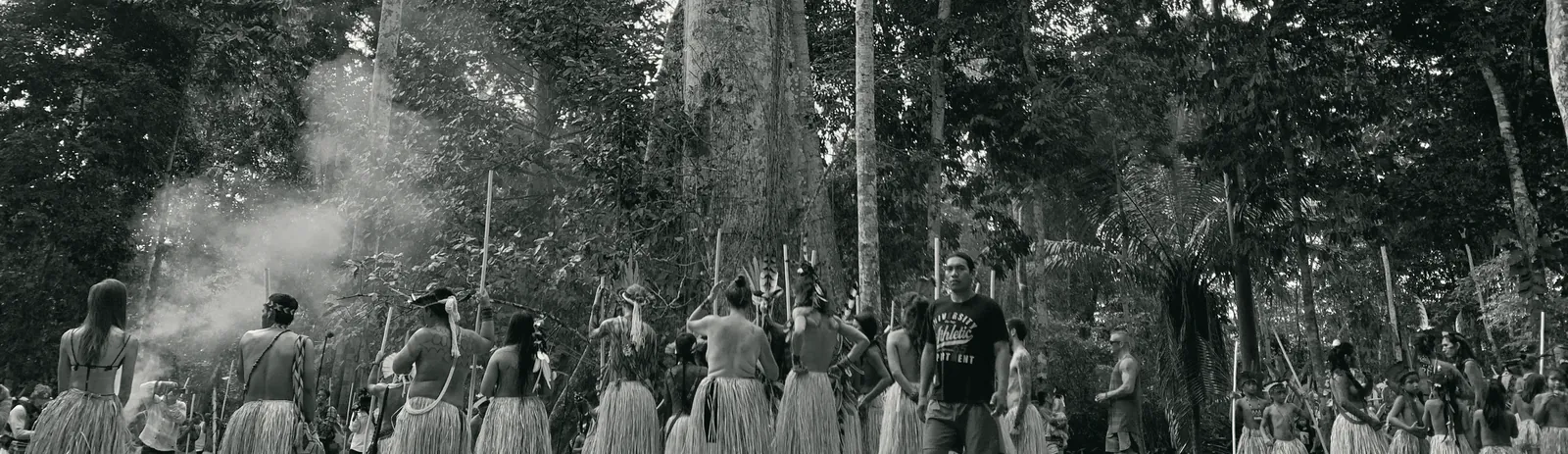
The Yawanawá, an Indigenous people of Acre, Brazil, were reduced from roughly five thousand to just over a hundred by the rubber boom and the violence that came with it. The missionary period that followed forbade the language, the ceremonies and the traditional medicines. For close to forty years the dieta of Muká, the path through which the people's leaders, healers and knowledge keepers are formed, did not happen once. Around the turn of the millennium three men entered that dieta again, and the culture has been in real rebirth since.
The global expansion of ayahuasca is a third wave of contact. For most of its history there was a balance: the vine and the leaf grew where they were used, and the people who prepared the medicine were the people who drank it. The expansion has broken that balance, and the abundance it creates elsewhere rarely returns to the place it came from.
In the Yawanawá language there is no word for thank you.
Gratitude is enacted, through care for what has been received and for the place it came from. That is what reciprocity means here.
Dennis Notten first came to Mutum in July 2013
- 2013
First arrival in Mutum. Stichting Sananda Wasi carries the work.
- 2018
The Dieta Center at Mutum, which the people there call the Muká Center.
- 2019
Céu do Novo Mundo is founded in California and carries the work on.
- Now
Plant a Vine, the planting chapter within Céu do Novo Mundo, renamed the Ayahuasca Restoration Foundation and widened to four pillars.
- 2027
Dennis and Alexandra will live in the territory for most of the year.
The Foundation grows out of more than a decade of work between Dennis and the Yawanawá, above all the village of Mutum. He has spent almost two years in the territory since that first arrival.
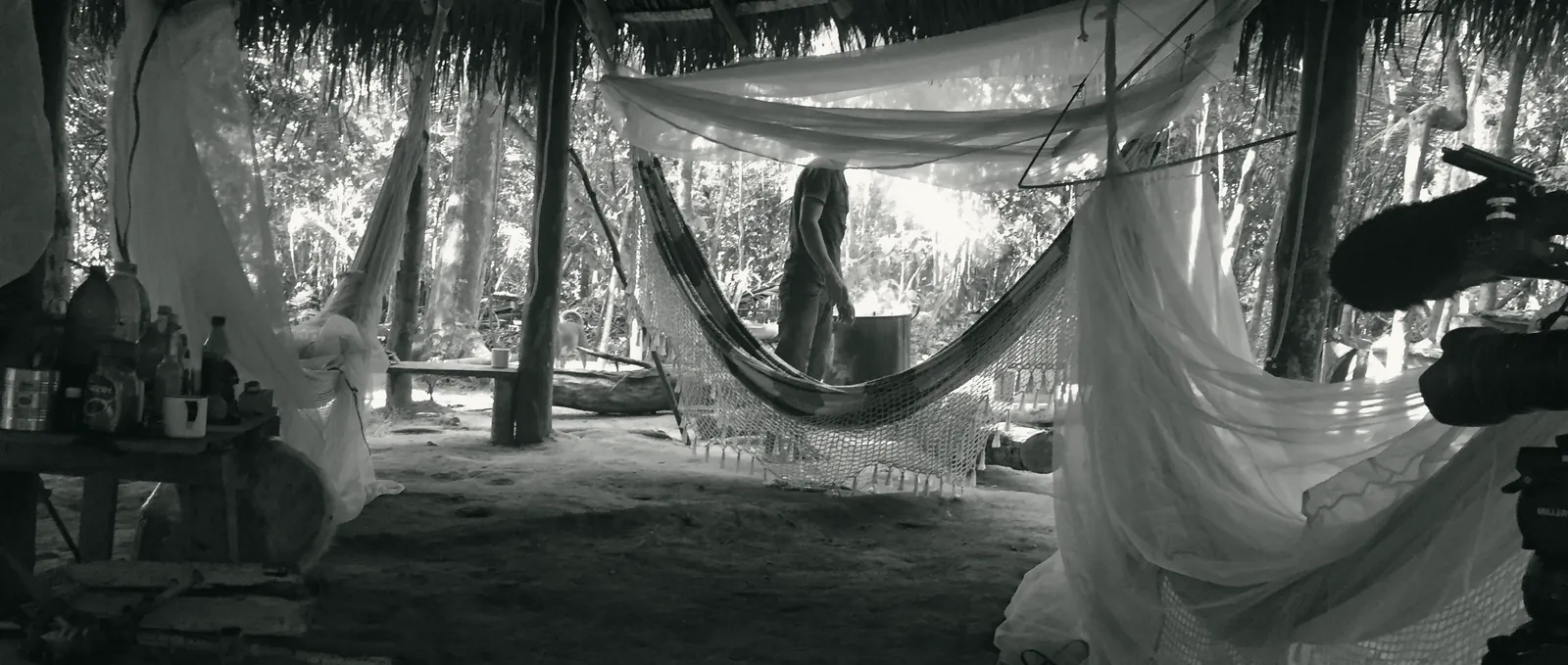
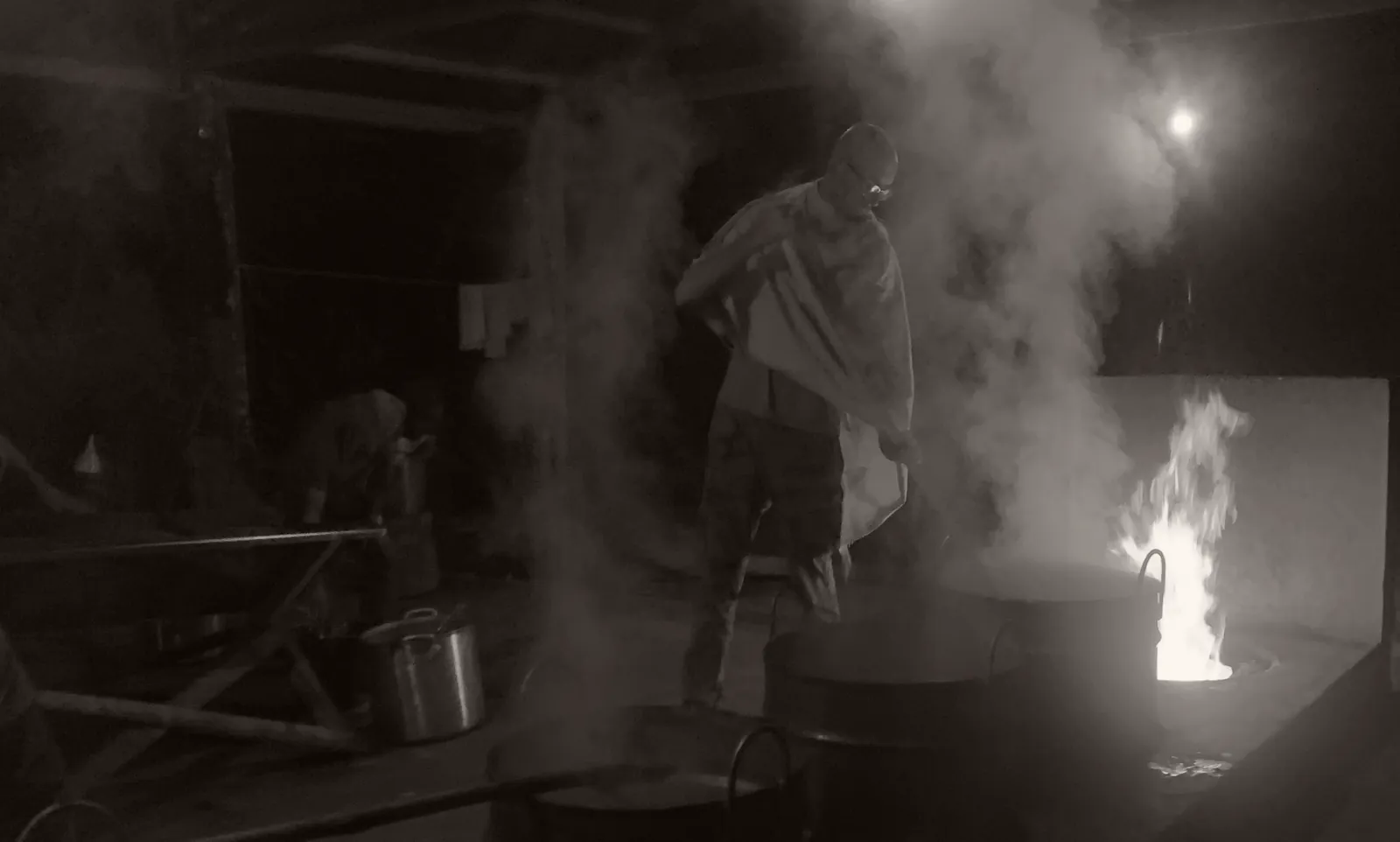
Together with the community, that work built small dieta centres and temples at Sete Estrelas, Apiuri and Mutum. In 2018 came the Dieta Center at Mutum, which the people there call the Muká Center. Beside it stand the fornalha and kitchen where medicine is cooked. Five Escolas do Feitio have been held.
The work was carried first by Stichting Sananda Wasi, a Dutch foundation (2013 to 2019), and since 2019 by Céu do Novo Mundo, where the planting became a chapter called Plant a Vine. The Ayahuasca Restoration Foundation is Plant a Vine renamed and widened to four pillars.
For most of 2027, Dennis Notten and Alexandra Ciobanu will be living in the territory rather than visiting it: through the feitio and the festival in December, the planting in February, the dieta season, and the Indigenous Ayahuasca Conference at Aldeia Sagrada in November. That has not been true in any year since this work began.
The four pillars work as one system
-
Vine and leaf restoration
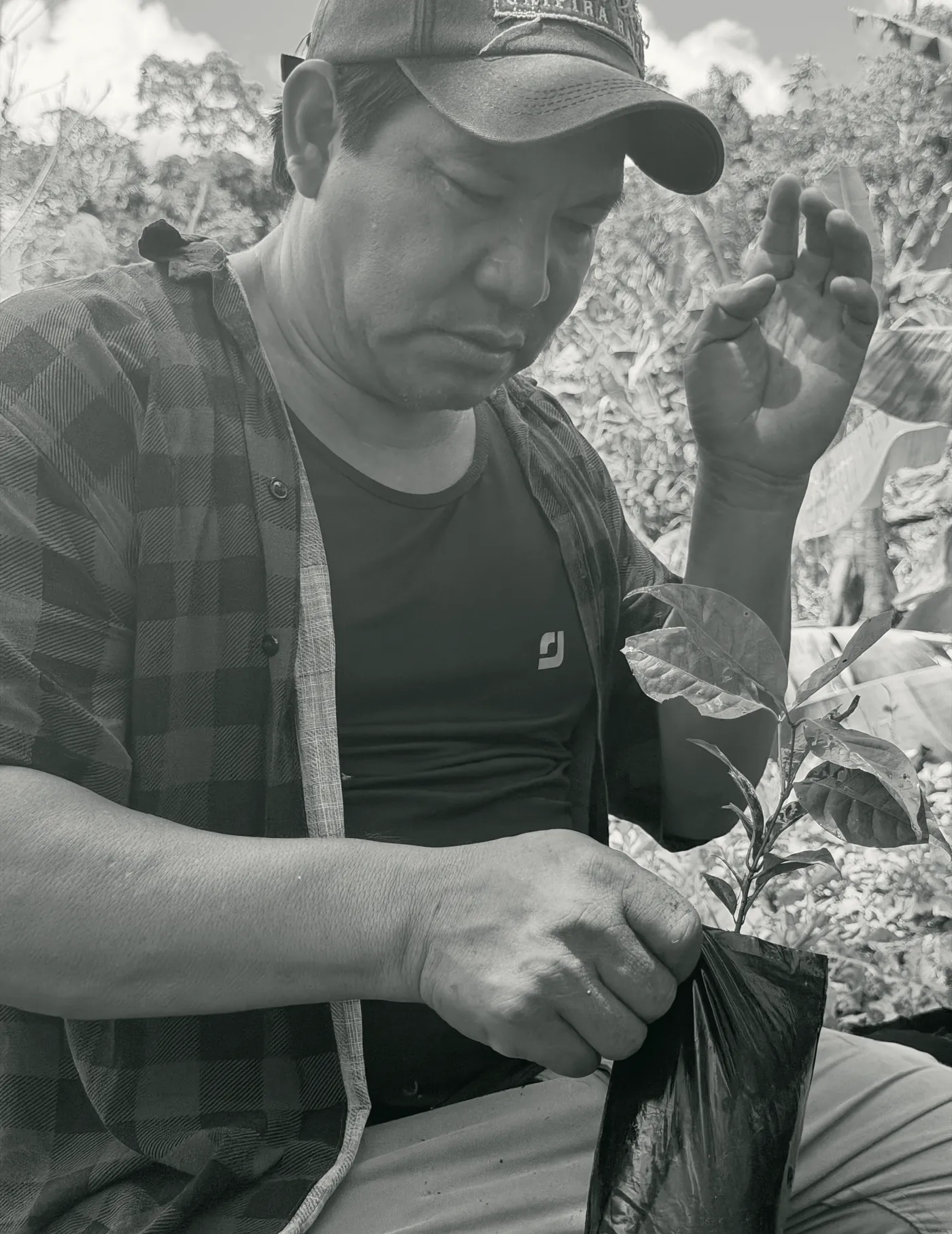
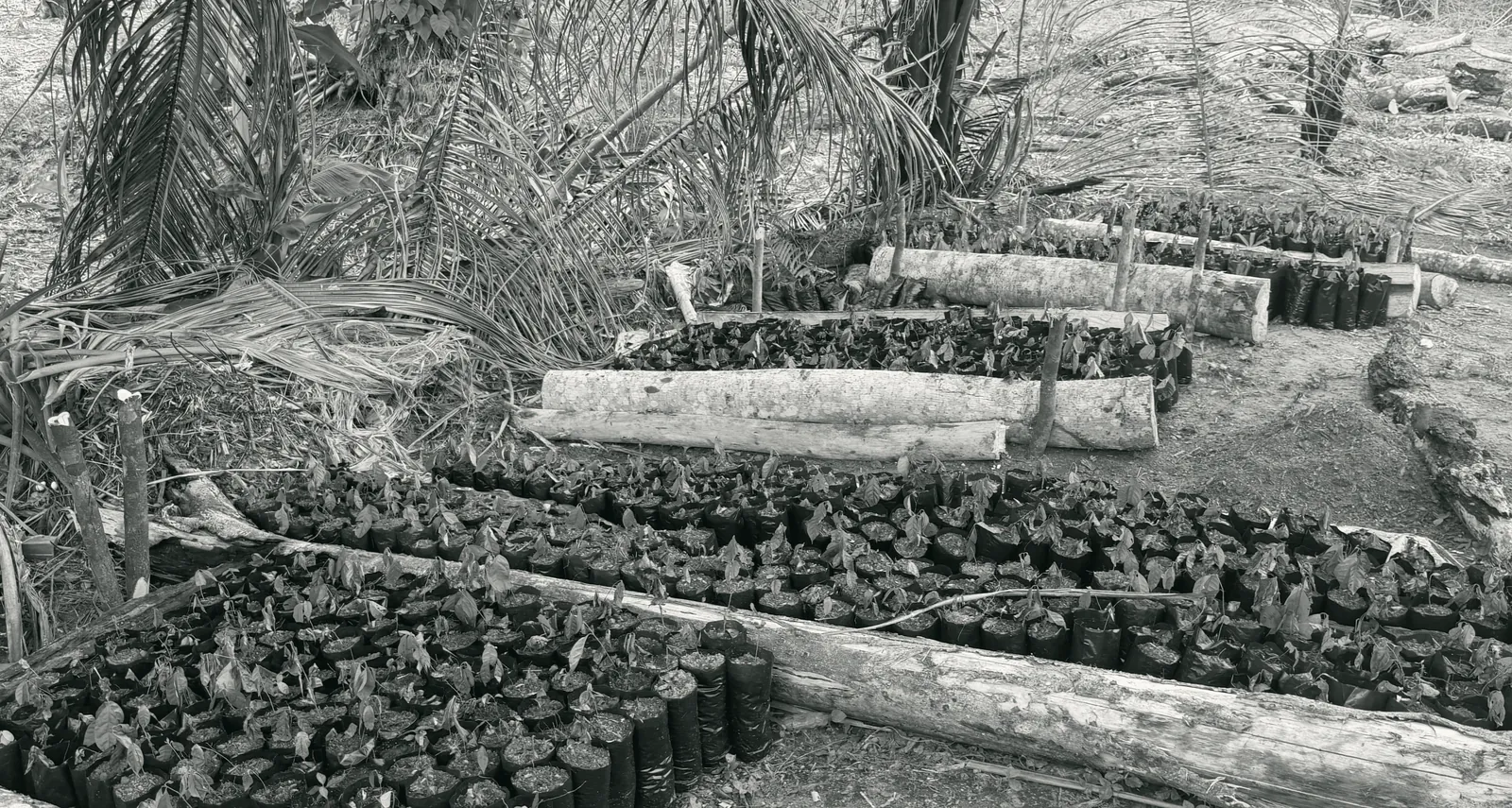
Nurseries, planting and long-term stewardship of Banisteriopsis caapi and Psychotria viridis. In Davi Nunes de Paula's method the vines are raised in a nursery bed on the spot where they will be planted, so they never travel once rooted, and follow-up is part of the design.
-
Food sovereignty
In a single generation the Yawanawá have gone from feeding themselves from the forest and the river to depending on rice, sugar and oil carried in by boat. Food forests, gardens and traditional crops around the villages are the way back.
-
Escola do Feitio
The knowledge of cooking the medicine was among the things lost in the missionary decades, and what survived was enough to cook for a village, not for festivals of a hundred and fifty people and ceremonies through the year. The Escola brings that knowledge back into the tribe's own hands: training cooks and building the fornalhas and kitchens, without losing what makes the practice sacred.
-
Ceremonial and hosting infrastructure
When visitors arrive, the work of receiving them falls on the village. This is the Foundation's share of it: building, and just as importantly maintaining, the spaces that hold ceremony, teaching, cooking and the people who come to learn. Nothing goes up without a funded plan for keeping it standing.
Restoration secures the plants, food sovereignty sustains the people who steward them, the Escola turns plants into medicine and carries the knowledge forward, and infrastructure holds the space in which the other three can happen.
Thirteen years of work, counted
- 2013First arrival in Mutum
- 2,167Vines planted since 2015
- 1,170Chacruna planted since 2015
- 5Escolas do Feitio held
Those are plants put into the ground, not plants still standing. We believe at least half of what we planted in the early years has been lost. We know why, we have changed the method because of it, and in December 2026 we are walking the forest to count what survives. We will publish what we find.
From Mutum outward, in three rings
-
Mutum first
Where Dennis first arrived in 2013, where the Dieta Center and the fornalha stand, and where Matsini Yawanawá holds the relationship. Everything the Foundation does elsewhere is first done here, done well, and written down.
-
The Yawanawá territory second
Planting has begun in Mutum, Yawatxiva, Matrixa, Awavana and Sete Estrelas. Each village decides for itself whether it joins, and the plan is built village by village, with the caciques, in person.
-
Other peoples third
The Huni Kuin and other Indigenous peoples of the Amazon carry the same medicine and face the same imbalance. As the method is proved in Yawanawá territory and the Foundation has the people to hold more than one relationship well, the work moves to them by their invitation, at the pace of trust, and never before the previous ring is standing on its own.
The principles the Foundation holds itself to
- Communities are partners and decision makers, not beneficiaries. They hold final authority over their territory, culture and knowledge, and no donation purchases a say in any of that.
- Expansion happens only by invitation, at the speed of trust rather than the speed of ambition, and Mutum remains the centre of gravity as the circle widens.
- Nothing is built or planted without a funded plan for its ongoing life.
- Real work is paid for. Goodwill is not a budget line.
- Where money comes from, what it is used for and who benefits are never obscured, even when the ceremony or knowledge it supports is rightly kept private.
- The medicine, the ceremonial practice and the sacred knowledge are not for sale, and funding creates no right of access to them.
Who carries it
Dennis Notten, founder, leads the Foundation. Alexandra Ciobanu coordinates everything that happens in the territory and is the daily channel to Matsini and the village. In the territory the Foundation works with Matsini Yawanawá, who holds Mutum and the Dieta Center, and with Davi Nunes de Paula and his team, who run the feitio and the plantation.
For anyone who wants to understand the work
Support the restoration
Every contribution goes directly into the work in the territory: plants in the ground, people paid for their time, and the knowledge carried forward. You can give once or walk with us month by month.
Opens PayPal in a new tab.
Donations are received by Céu do Novo Mundo, a registered 501(c)(3) in California, on behalf of the Ayahuasca Restoration Foundation, and are tax deductible in the United States to the extent allowed by law.
Zelle, wire transfer or another currency: see How to give (PDF), opens in a new tab or write to mail@sacredjourney.earth. Donors outside the United States can give by the same routes; there is no US deduction, and other options can be discussed.